





Vol. 28 - Num. 111
Original Papers
Approach to mild digestive disorders in infants at the primary care level: a multicenter cross-sectional and observational study
Patricia Villegas Villegasa, Grupo de Estudio DIGESTb
aGastroenteróloga infantil. Centro Pediátrico ARCC. Barcelona. España.
bCAPI Baix-a-Mar. Vilanova i la Geltrú. Barcelona. España.
Correspondence: P Villegas. E-mail: pvillegas@csapg.cat
Reference of this article: Villegas Villegas P, . Approach to mild digestive disorders in infants at the primary care level: a multicenter cross-sectional and observational study . Rev Pediatr Aten Primaria. 2026;28:323-33. https://doi.org/10.60147/dd414306
Published in Internet: 22-09-2026 - Visits: 1644
Abstract
Introduction: mild digestive disorders (MDDs) are common in early childhood and a general cause of concern for families.
Objective: to describe the clinical profile, prevalence and approach to the management of MDDs in pediatric practice in Spain.
Material and methods: multicenter, retrospective, and observational study through a survey of pediatricians who managed infants and children under 2 years of age with MDDs in primary care pediatric clinics in Spain. Participants completed a questionnaire that included items on sociodemographic variables, the prevalence, symptoms, and management of MDDs, and parental perception of the impact of the disorder.
Results: a total of 199 pediatricians (78.9% female; mean age, 46.3 years) participated in the study. Infant colic was the most common FGID (37.6%), followed by regurgitation (26.8%) and functional constipation (21.9%). Nearly all participants (96.5%) reported not recommending switching to formula feeding for breastfed infants, 67.3% recommended special formulas to treat MDDs, and 82.9% recommended probiotics, especially Lactobacillus reuteri. In addition, 91.5% asked about the impact on parental quality of life, and the most frequently reported effects were lack of rest (96.5%) and family distress (94.5%).
Conclusions: mild digestive disorders are common and significantly affect families. The approach to management includes dietary and postural measures and the use of probiotics, with a focus on the well-being of the infant and caregivers.
Keywords
● Infants ● Mild digestive disorder ● Rome IVINTRODUCTION
Mild digestive disorders (MDDs), also referred to as functional gastrointestinal disorders (FGIDs), are frequent in early childhood and cause significant concern in families.1,2 They encompass a group of chronic and recurrent symptoms attributable to the gastrointestinal tract that cannot be explained by structural or chemical abnormalities, chief among which are infant colic, infant regurgitation, functional diarrhea and functional constipation.3,4 These disorders are a common reason for pediatric primary care visits, have an impact on the quality of life of the child and family, and, in the absence of verifiable organic disease, can lead to unnecessary testing and treatment. There are no objective biomarkers for their assessment, so FGIDs are defined based on the Rome IV criteria for neonates/toddlers, including symptoms of infant regurgitation, infant rumination syndrome, cyclic vomiting syndrome, infant colic, functional diarrhea, infant dyschezia, and functional constipation.5,6
Epidemiological data on FGIDs in young children are scarce. A European multicenter study of 2751 children under 2 years found a prevalence of 24.7% in infants aged 0 to 12 months and 11.3% in toddlers aged 13 to 48 months.7 In a group of 189 children under 4 years managed in the pediatric gastroenterology clinic of a secondary care hospital in Madrid, Spain, the annual incidence of FGIDs was 16.4%.8 A systematic review and meta-analysis of 15 studies including a total of 48 325 children aged less than 2 years found an overall prevalence of FGIDs according to the Rome IV criteria of 22% (95% confidence interval [95% CI] 15–31%), with the highest prevalence corresponding to functional constipation.9
The etiology of FGIDs is complex and multifactorial and involves the interaction of genetic, environmental, psychological, and psychosocial vulnerability factors, in addition to the immaturity of the digestive system, giving rise to a biopsychosocial model characterized by disorders of brain-gut interaction and dysregulation of the gut microbiota.6,10 Therefore, the treatment of FGIDs calls for an integrated medical, psychological, and nutritional approach. Several scientific societies, including the Asociación Española de Pediatría (AEP, Spanish Association of Pediatrics) , the Sociedad Española de Gastroenterología (SEGHNP, Spanish Society of Pediatric Gastroenterology), and the European Society for Pediatric Gastroenterology, Pediatric Hepatology and Nutrition (ESPGHAN), have established diagnostic and therapeutic protocols for FGIDs in children aged less than four years, with explicit recommendations for each symptom and emphasis on the importance of educating and reassuring parents about the benign nature of these conditions and their natural history.11,12 However, some young children with FGIDs may have comorbidities, such as functional dyspepsia or gastroesophageal reflux, among others, that can complicate the interpretation of symptoms and their treatment.11
Studies published in the literature have generally analyzed FGIDs focusing on individual symptoms or in combined pediatric and adolescent samples,13-18, but there are few real-world data describing overall aspects of FGIDs in infancy and early childhood.19-21 The aim of our study was to characterize the approach to the management of FGIDs in infants and toddlers aged less than 2 years at the primary care level in Spain.
MATERIAL AND METHODS
Design and participants
We designed a multicenter, retrospective, observational study (DIGEST study) to be conducted in pediatric primary care clinics throughout Spain. The participants were primary care pediatricians working in public and private care settings throughout the country who managed infants and toddlers under 2 years of age with FGIDs in their practice. Pediatricians who did not manage children with these characteristics were excluded.
The primary objective was to describe the management of FGIDs in infants and toddlers under 2 years of age in primary care pediatric clinics in Spain. The secondary objectives were: (a) to analyze the treatment of FGIDs in patients with concomitant conditions, (b) to identify actions taken by parents in the absence of medical advice, and (c) to assess the impact on parental quality of life.
The study protocol was approved by the Clinical Research Ethics Committee of Hospital Clínico San Carlos in Madrid, Spain.
Study protocol
The questionnaire was developed by the research coordinator (P.V.V.) according to the objectives of the study and comprised 39 items to collect data on the characteristics of reporting providers (12 items), the prevalence and diagnosis of FGIDs (3 items), the symptoms and treatment of the disorders (3 items), the interventions implemented by parents in absence of medical advice (2 items) and parental quality of life (3 items). Excluding the items corresponding to the reporting provider, the answers to all other items were aggregated data for the 6 patients aged less than 2 years with FGIDs that each pediatrician had seen most recently in their practice. The questionnaire can be consulted in the supplemental material.
The fieldwork was conducted between March 1 and June 30, 2025. Providers were invited to participate through a flyer sent via email to the primary care pediatricians registered in the Medynet database (http://www.medynet.com). Medynet is a network developed in 1996 as the first Internet access node exclusively dedicated to the health care sector in Spain. The data collection questionnaire was hosted on an online platform, and providers who agreed to participate accessed it via a password-protected web link.
Statistical analysis
We calculated a minimum sample size of 200 participants for a margin of error of 7%, a 95% confidence level, and 50% heterogeneity. We present a descriptive analysis of the results, with categorical variables expressed as absolute frequencies and percentages, and quantitative variables as mean, standard deviation (SD), and range (minimum, maximum). The data were analyzed with the SAS software, version 9.1.3 for Windows (Statistical Analysis Systems, SAS Institute, Cary, NC, USA).
RESULTS
Sample characteristics
A total of 199 primary care pediatricians (78.9% female) participated in the study, with a mean age of 46.3 ± 10.5 years (range 29-70 years) and 17.1 ± 10.6 years of professional experience. Of this total, 56.3% had participated in training activities on FGIDs in the past year. In addition, 46.7% were members of the AEP, 41.2% of the Asociación Española de Pediatría de Atención Primaria (AEPap, Spanish Association of Primary Care Pediatrics), and 28.1% of the Sociedad Española de Pediatría Extrahospitalaria y Atención Primaria (SEPEAP, Spanish Society of Outpatient and Primary Care Pediatrics). Most worked in the public health system (85.9%) and in urban settings (73.9%), with broad representation across Spain. When it came to their workloads, 59.3% saw more than 100 patients each week, 23.6% between 51 and 100 patients, and 16.1% between 21 and 50 patients. Infants and toddlers under 2 years of age with FGIDs accounted for 26% to 50% of the patient volume for 58.8% of pediatricians, less than 25% of patients for 31.7%, and 51% to 75% of patients for 9.6%, with the proportion not exceeding 75% in any case.
Prevalence and symptoms of mild digestive disorders
The most common FGID was infant colic, accounting for a mean of 37.6 ± 21.4% of cases, followed by infant regurgitation (26.8 ± 18.0%), functional constipation (21.9 ± 15.6%), infant dyschezia (16.9 ± 17.2%), and functional diarrhea (10.5 ± 13.7%). Furthermore, 49.6% were newly diagnosed cases of FGIDs and 31.7% cases currently in follow-up.
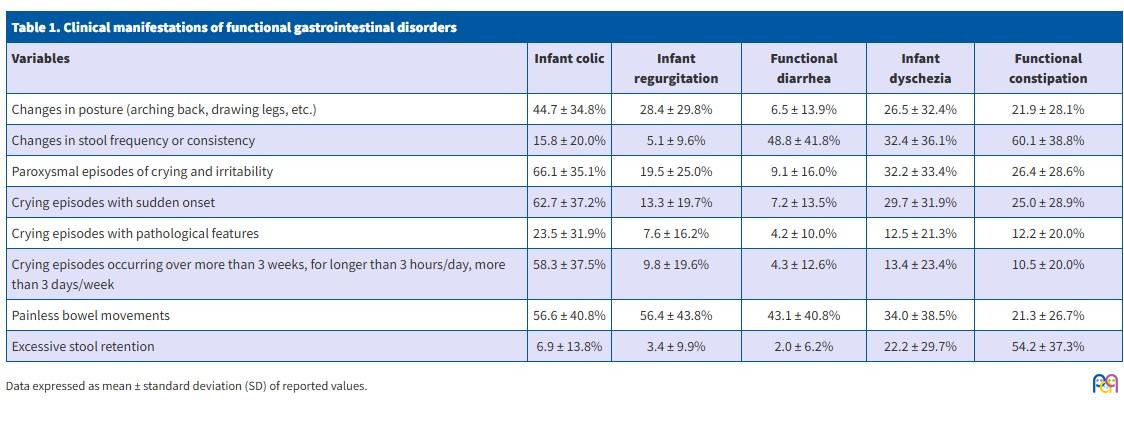
Table 1 summarizes the most frequent symptoms of each disorder. Leg drawing and other postural changes were most prevalent in infant colic (44.7%) and infant regurgitation (28.4%). Stool changes were most frequent in functional constipation (60.1%), functional diarrhea (48.8%) and infant dyschezia (32.4%). Crying bouts of any type (paroxysmal, pathological) were more frequent in infant colic. Excessive stool retention was observed in 54.2% of cases of functional constipation.
| Table 1. Clinical manifestations of functional gastrointestinal disorders | |||||
|---|---|---|---|---|---|
| Variables | Infant colic | Infant regurgitation | Functional diarrhea | Infant dyschezia | Functional constipation |
| Changes in posture (arching back, drawing legs, etc.) | 44.7 ± 34.8% | 28.4 ± 29.8% | 6.5 ± 13.9% | 26.5 ± 32.4% | 21.9 ± 28.1% |
| Changes in stool frequency or consistency | 15.8 ± 20.0% | 5.1 ± 9.6% | 48.8 ± 41.8% | 32.4 ± 36.1% | 60.1 ± 38.8% |
| Paroxysmal episodes of crying and irritability | 66.1 ± 35.1% | 19.5 ± 25.0% | 9.1 ± 16.0% | 32.2 ± 33.4% | 26.4 ± 28.6% |
| Crying episodes with sudden onset | 62.7 ± 37.2% | 13.3 ± 19.7% | 7.2 ± 13.5% | 29.7 ± 31.9% | 25.0 ± 28.9% |
| Crying episodes with pathological features | 23.5 ± 31.9% | 7.6 ± 16.2% | 4.2 ± 10.0% | 12.5 ± 21.3% | 12.2 ± 20.0% |
| Crying episodes occurring over more than 3 weeks, for longer than 3 hours/day, more than 3 days/week | 58.3 ± 37.5% | 9.8 ± 19.6% | 4.3 ± 12.6% | 13.4 ± 23.4% | 10.5 ± 20.0% |
| Painless bowel movements | 56.6 ± 40.8% | 56.4 ± 43.8% | 43.1 ± 40.8% | 34.0 ± 38.5% | 21.3 ± 26.7% |
| Excessive stool retention | 6.9 ± 13.8% | 3.4 ± 9.9% | 2.0 ± 6.2% | 22.2 ± 29.7% | 54.2 ± 37.3% |
Approach to treatment and follow-up
At the time of the first visit or diagnosis, the feeding modality was breastfeeding in 42.2 ± 22.7% of the patients, formula feeding in 32.6 ± 19.4%, and mixed feeding in 25.2 ± 12.7%. A majority of providers (96.5%) did not recommend switching to formula feeding in breastfed patients, and 67.3% recommended special formulas to treat FGIDs.
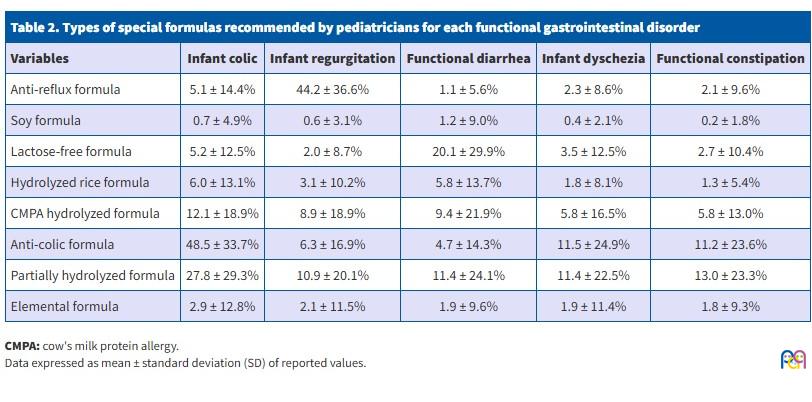
Table 2 summarizes the types of formula and the relative frequency of their recommendation for each of the FGIDs. Anti-reflux formulas were primarily recommended for patients with infant regurgitation (44.2%), lactose-free formulas for functional diarrhea (20.1%), anti-colic formula for infant colic (48.5%), and partially hydrolyzed formula for all FGIDs, especially infant colic (27.8%). Both rice-based hydrolyzed formulas and elemental formulas were recommended in less than 2% of cases. Regarding the effectiveness of these formulas, the anti-reflux formula was considered effective by an average of 50.8% of participants for infant regurgitation, and the partially hydrolyzed formula was considered effective by 35.4% of participants for infant colic. For the remaining formulas (rice, soy, and elemental), the proportion or providers that considered them effective was less than 12% for each of the FGIDs.
| Table 2. Types of special formulas recommended by pediatricians for each functional gastrointestinal disorder | |||||
|---|---|---|---|---|---|
| Variables | Infant colic | Infant regurgitation | Functional diarrhea | Infant dyschezia | Functional constipation |
| Anti-reflux formula | 5.1 ± 14.4% | 44.2 ± 36.6% | 1.1 ± 5.6% | 2.3 ± 8.6% | 2.1 ± 9.6% |
| Soy formula | 0.7 ± 4.9% | 0.6 ± 3.1% | 1.2 ± 9.0% | 0.4 ± 2.1% | 0.2 ± 1.8% |
| Lactose-free formula | 5.2 ± 12.5% | 2.0 ± 8.7% | 20.1 ± 29.9% | 3.5 ± 12.5% | 2.7 ± 10.4% |
| Hydrolyzed rice formula | 6.0 ± 13.1% | 3.1 ± 10.2% | 5.8 ± 13.7% | 1.8 ± 8.1% | 1.3 ± 5.4% |
| CMPA hydrolyzed formula | 12.1 ± 18.9% | 8.9 ± 18.9% | 9.4 ± 21.9% | 5.8 ± 16.5% | 5.8 ± 13.0% |
| Anti-colic formula | 48.5 ± 33.7% | 6.3 ± 16.9% | 4.7 ± 14.3% | 11.5 ± 24.9% | 11.2 ± 23.6% |
| Partially hydrolyzed formula | 27.8 ± 29.3% | 10.9 ± 20.1% | 11.4 ± 24.1% | 11.4 ± 22.5% | 13.0 ± 23.3% |
| Elemental formula | 2.9 ± 12.8% | 2.1 ± 11.5% | 1.9 ± 9.6% | 1.9 ± 11.4% | 1.8 ± 9.3% |
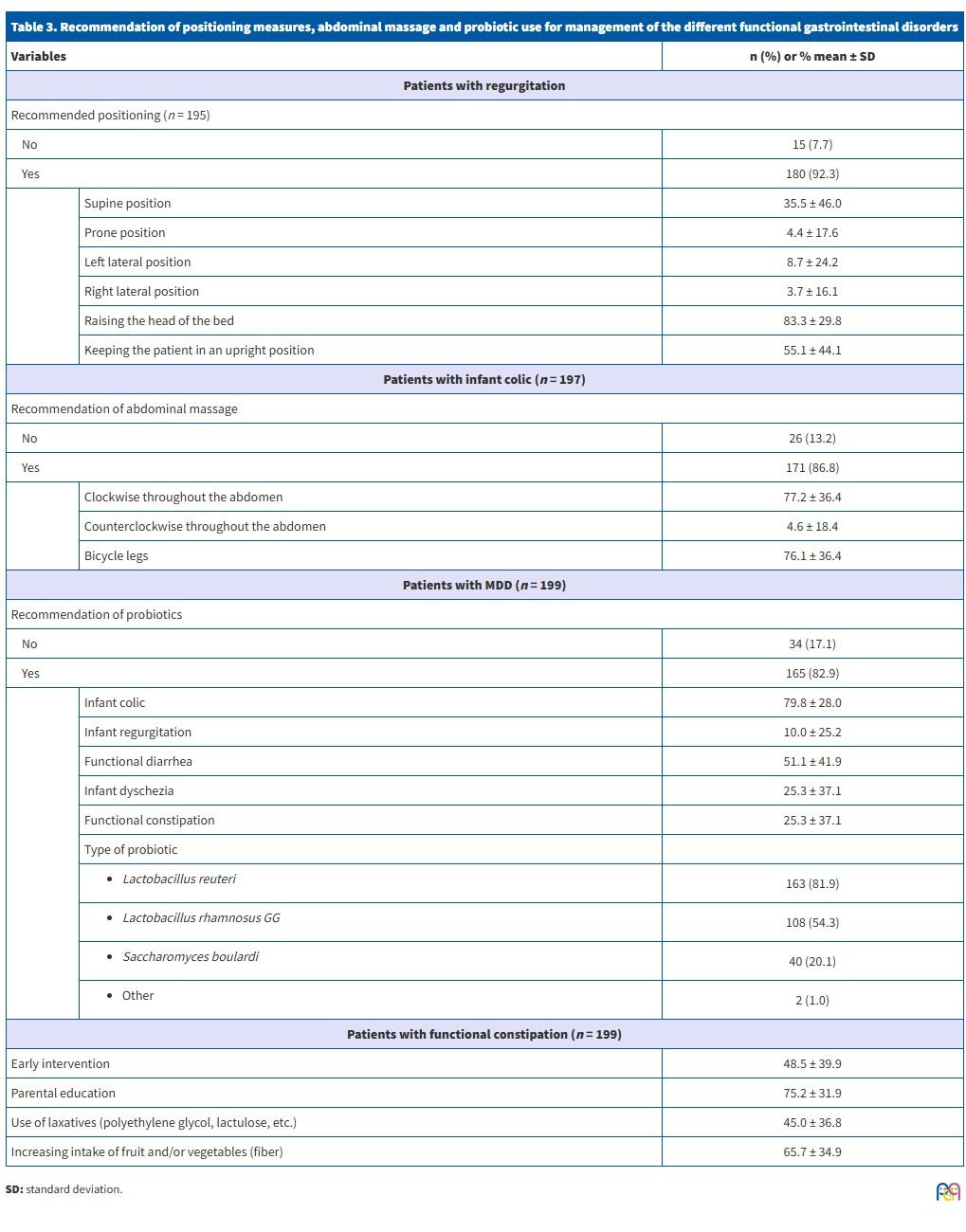
Concerning the recommendation of other measures, including the administration of probiotics (Table 3), 92.3% of pediatricians recommended positional measures for infant regurgitation, most frequently raising the head of the bed (83.3%) and keeping the child in an upright position (55.1%). For infant colic, 86.8% recommended abdominal massage, especially in a clockwise direction across the entire abdomen (77.2%) or bicycle legs (76.1%). Probiotics were recommended by 82.9% of pediatricians, most frequently for infant colic (79.8%) and functional diarrhea (51.1%), and predominantly in combinations including Lactobacillus reuteri (81.9%) or Lactobacillus rhamnosus GG (54.3%). For patients with functional constipation, parental education and increased consumption of fruits and/or vegetables were considered effective measures by 75.2% and 65.7% of respondents, respectively; it is also worth highlighting that early intervention with implementation of a treatment plan without waiting for the condition to resolve spontaneously (48.5%) and the use of laxatives (45.0%) were also frequent.
| Table 3. Recommendation of positioning measures, abdominal massage and probiotic use for management of the different functional gastrointestinal disorders | ||
|---|---|---|
| Variables | n (%) or % mean ± SD | |
| Patients with regurgitation | ||
| Recommended positioning (n = 195) | ||
| No | 15 (7.7) | |
| Yes | 180 (92.3) | |
| Supine position | 35.5 ± 46.0 | |
| Prone position | 4.4 ± 17.6 | |
| Left lateral position | 8.7 ± 24.2 | |
| Right lateral position | 3.7 ± 16.1 | |
| Raising the head of the bed | 83.3 ± 29.8 | |
| Keeping the patient in an upright position | 55.1 ± 44.1 | |
| Patients with infant colic (n = 197) | ||
| Recommendation of abdominal massage | ||
| No | 26 (13.2) | |
| Yes | 171 (86.8) | |
| Clockwise throughout the abdomen | 77.2 ± 36.4 | |
| Counterclockwise throughout the abdomen | 4.6 ± 18.4 | |
| Bicycle legs | 76.1 ± 36.4 | |
| Patients with MDD (n = 199) | ||
| Recommendation of probiotics | ||
| No | 34 (17.1) | |
| Yes | 165 (82.9) | |
| Infant colic | 79.8 ± 28.0 | |
| Infant regurgitation | 10.0 ± 25.2 | |
| Functional diarrhea | 51.1 ± 41.9 | |
| Infant dyschezia | 25.3 ± 37.1 | |
| Functional constipation | 25.3 ± 37.1 | |
| Type of probiotic | ||
|
163 (81.9) | |
|
108 (54.3) | |
|
40 (20.1) | |
|
2 (1.0) | |
| Patients with functional constipation (n = 199) | ||
| Early intervention | 48.5 ± 39.9 | |
| Parental education | 75.2 ± 31.9 | |
| Use of laxatives (polyethylene glycol, lactulose, etc.) | 45.0 ± 36.8 | |
| Increasing intake of fruit and/or vegetables (fiber) | 65.7 ± 34.9 | |
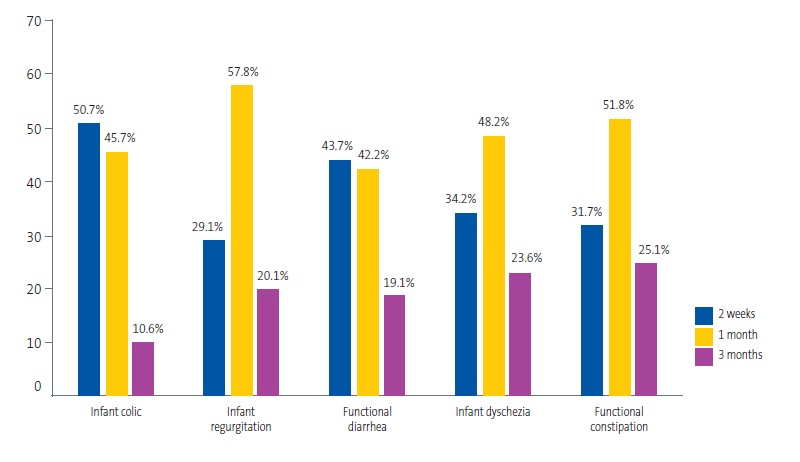
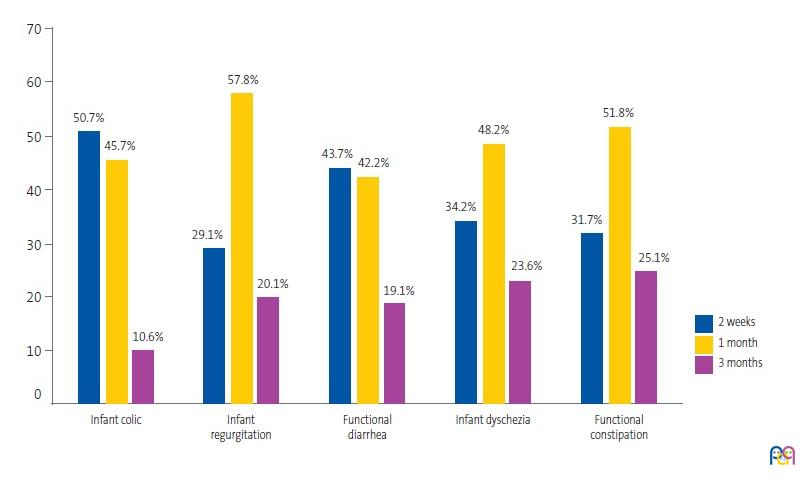
On the other hand, a high percentage of pediatricians believed that FGIDs improved without treatment or the use of special formulas on account of their natural history (average of 66.4% for infant colic, 68.9% for infant regurgitation, 57.7% for functional diarrhea, 70.6% for infant dyschezia, and 41.5% for functional constipation). With regard to follow-up, most participants believed that children with FGIDs should be reevaluated every 2 weeks or every month (Figure 1). In addition, when it came to patients currently in follow-up, participants reported changes in treatment most frequently in relation to functional constipation (17.7%), followed by infant colic (16.7%), infant regurgitation (13.3%), functional diarrhea (9.1%), and infant dyschezia (5.7%). Lack of clinical improvement with persistent symptoms was the main reason for changing treatment.
| Figure 1. Reported follow-up of infants and toddlers aged less than 2 years with functional gastrointestinal disorders by specific disorder |
|---|
 |
Cooccurrence of disorders
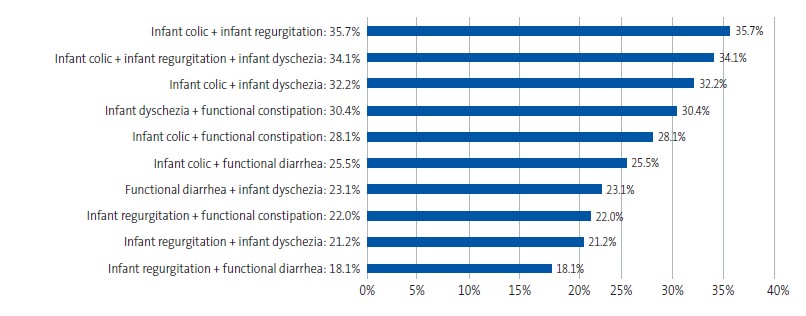
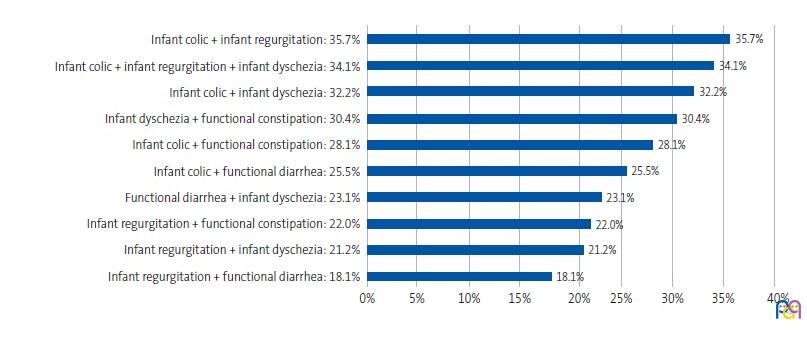
The mean percentage of patients who had more than one FGID concomitantly was 36.7 ± 21.8%. Figure 2 presents the reported combinations of FGIDs. Infant colic and infant regurgitation were the most frequently associated disorders (35.7%), followed by infant colic, infant regurgitation, and infant dyschezia (34.1%), and by infant colic and infant dyschezia (32.2%). The approach to treatment reported most frequently by pediatricians in relation to cooccurring FGIDs was to address each disorder separately (65.9%).
| Figure 2. Cooccurrence of functional gastrointestinal disorders in infants and toddlers aged less than 2 years |
|---|
 |
Family-related aspects
Of all respondents, 50.7% reported that measures to manage FGIDs had been implemented in their patients without prior medical advice in 29.6 ± 18.4% of cases. Furthermore, 91.5% of pediatricians reported that they asked parents whether the FGID of the child affected their quality of life, and a mean of 73.0 ± 24.0% reported that it did, primarily due to a lack of rest (96.5%), family anxiety (94.5%), and a negative emotional impact (73.4%).
DISCUSSION
This nationwide study, conducted in the framework of primary care pediatric clinics, helps to characterize the clinical profile and management of FGIDs in infants and toddlers aged less than 2 years. The participating pediatricians had extensive experience with these disorders due to their years in the field, the number of patients they saw each week, their participation in educational activities related to FGIDs, and their membership in scientific societies. The clinical manifestations of FGIDs in this age group, particularly infant colic, infant regurgitation, and functional constipation, despite their low severity, have a significant impact on the family, with a relevant reduction in parental quality of life. Furthermore, the chronic and recurrent nature of the symptoms is associated with an increased use of health care resources.4
The reported prevalence of FGIDs in children under 2 years in Spain was high, as 58.8% of pediatricians estimated that between 26% and 50% of their patients in this age group have FGIDs, in agreement with the prevalence figures above 20% reported in other studies.7-9 The most frequent disorders were infant colic (37.6%), regurgitation (26.8%), and functional constipation (21.9%). A systematic review of 20 studies encompassing a total of 18 935 pediatric patients, infant colic and regurgitation were also the most common disorders in infants aged 0 to 12 months, while functional constipation was the most common condition in children aged 13 to 48 months.21 The clinical presentation of each of these disorders was consistent with the findings of other studies,7-9,13 chiefly characterized by episodes of crying and irritability in infant colic, changes in position and painless bowel movements in regurgitation, and changes in stool frequency/consistency and excessive stool retention in functional constipation. Stool changes were also the most common symptoms in infant dyschezia and functional diarrhea.
With regard to treatment, nearly all pediatricians were against discontinuing breastfeeding in favor of formula feeding. The AEP, the SEGHNP and the ESPGHAN11,12 recommend continuing breastfeeding for all FGIDs. In a study in 6060 infants (8.1% preterm), the use of any formula feeding at hospital discharge was a significant risk factor for infant colic, regurgitation and functional constipation.22 In addition, breastfeeding, maintained for at least 6 months after birth, has been found to have an important protective effect against the morbidity and mortality associated with diarrhea.23,24 Overall, 67.3% of pediatricians recommended special formulas depending on the FGID, although he percentage for each specific FGID was low. The most commonly recommended formulas were anti-colic formula for infant colic (48.5%), anti-reflux formula for infant regurgitation (44.2%), lactose-free formula for functional diarrhea (20.1%), and partially hydrolyzed formula for infant dyschezia (11.4%) and functional constipation (13.0%). Formulas enriched with β-palmitate and additional magnesium may be appropriate for softening stools in the case of constipation.12
Probiotics were recommended by 82.9% of pediatricians, especially combinations including Lactobacillus reuteri. Although the pathophysiology of FGIDs is complex, there is evidence that intestinal dysbiosis—involving an imbalance in acid-producing or proteolytic bacteria—plays a role both in the development of these disorders and in the modulation of their clinical manifestations.25,26 In a randomized controlled trial in 90 infants aged 1 to 4 months, treatment for 25 consecutive days with 5 drops/day of Limosilactobacillus reuteri NCIMB 30351 was associated with a statistically significant decrease in the number of colic episodes, duration of crying, and number of regurgitations, as well as a decrease in diarrhea, and an increase in the number of bowel movements in infants with constipation compared to controls who received placebo.27 However, there is insufficient evidence of the efficacy of probiotics in the management of infant colic and other functional gastrointestinal disorders in infants.28 On the other hand, the ESPGHAN Nutrition Committee has stated that the current evidence is insufficient to recommend the use of reduced lactose content formulas, partially or extensively hydrolyzed protein formulas, and formula supplemented with prebiotics or probiotics.12
Mild digestive disorders frequently cause anxiety in parents and have an impact on the quality of life of the family.29 A majority of participating pediatricians (91.5%) explored the impact of FGIDs on parental quality of life, and the negative effects reported most frequently by parents were lack of rest (96.5%) and family anxiety (94.5%). In this regard, pediatricians play a vital role in providing information about the benign nature of FGIDs, reassuring parents, and offering dietary advice, which can prevent parents from taking action without professional guidance.30
The limitations of the study involve the representativeness of the sample and the nonrandom selection of participants. Given the descriptive and retrospective nature of the study, which is based on aggregated data, the results for continuous variables were expressed as mean and SD without estimates of 95% confidence intervals, which limits their inferential interpretation.
Nevertheless, the distribution of pediatricians throughout Spain and the inclusion of aggregated data from 6 patients per provider, amounting to 1194 infants and toddlers, can be considered strengths of the study.
Finally, we should note that FGIDs were defined based on the Rome IV criteria for newborns and toddlers, as the study was conducted prior to the publication of the Rome V criteria in May 2026.31 At the time of this writing, the Rome V criteria call for a biopsychosocial, personalized, and evidence-based approach to the definition of disorders of gut-brain interaction. These disorders are characterized by gastrointestinal symptoms related to any combination of motility disturbance, visceral hypersensitivity, altered mucosal and immune function, altered gut microbiota, or altered central nervous system processing. From this perspective, the FGID categories are redefined to align to the emerging knowledge on neurodevelopment and the gut-brain axis.31 Future studies should consider the new conceptualization of FGIDs in light of the new clinical profiles and diagnostic algorithms resulting from the changes introduced by Rome V.
CONCLUSIONS
Functional gastrointestinal disorders are common in infants and young toddlers, especially colic, regurgitation and functional constipation, and require an individualized therapeutic approach. More than 95% of pediatricians recommended maintaining breastfeeding, 67% recommended the use of special formulas, and 83% administration of probiotics, particularly Lactobacillus reuteri. Parental education and emotional support are key aspects to improve the quality of life of the child and the child’s immediate circle.
ACKNOWLEDGMENTS
I thank the members of the DIGEST Study Group for their participation in the project. Also, Saned from Medscape for the support with the study logistics, and Dr. Marta Pulido for her collaboration in drafting the manuscript and her editorial support. DIGEST Study Group (in alphabetical order): N. Aielo, I. Alcalá Ramírez, S. Alonso Ortega, P. Alonso Sanmartin, C. Alonso Schwinch, C. Amorelli Palladino, T. Atienza Almarcha, A. Ayesa Naudin, A. Bailén Vergara, l. Barahona Rondon, E. Bartoll Alguacil, M. Beltrán Pérez, I. Botana del Arco, C. Bouzas Martínez, M.E. Bueno Sánchez, M.A. Cabañero Pisa, A. Cabrero Alexis, M.J. Cañete Pérez, V.J. Caraballoso García, A. Carnicero Iglesias, M. Casariego Toledo, J.L. Castiello Oliver, J.M. Castro Blondell, I.M. Ceballos Rodríguez, A. Cervera Albenca, N. Clavero Montañés, J.M. Colina Jimeno, C. Conde Sanz, M.C. Contessotto Avilés, J. Coronel Medina, J. Coronel Medina, D.A. Cortés García, T. Crespo Díaz, A.H. Cruz Oliver, A. Cruz Rodríguez, C. Cuevas Espejo, M.l. de Luna Armenteros, F. de Prada Rodríguez, M. Del Vecchio, P. Doménech Terricabras, J.M. Durán López, G.D. Egues Cachau, S. El Solh Naim, I. Espejo Barbudo, O. Espinazo Ramos, l. Exposito Alonso, J.F. Exposito Montes, M.A. Feo García, M.N. Fernández Chapucio, M. Fernández López, M. Fernández Mateo, S. Fernández Peregrina, G.A. Fleitas Martino, M.L. Franco González, M. Fuentes Martin, J. Fujkova Fujkova, A. Galán García, F. Galán Muñoz, P. Gamboa Pacheco, M.A. Ganga Valle, M.M. García González, E. García Pérez, E. García Cardó, P. García Druggiero, N. García Maset, M.J. García Monje, C. García Peláez, G. García Ron, A. García Ruiz, N. García Sánchez, S.A. García Sarraille, A. García Suárez, J. García Vázquez, O.M. Gómez Bueno, M.C. Gómez Hidalgo, J.F. Gómez Urbaez, M. Gómez Verdugo, S.A. González Cerrato, G. González Hernández, A. González Zayas, P. Gonzalo Costales, M.C. Granja Martínez, J. Guerra Vilca, E. Gutiérrez Moreno, B. Hernández Macho, J. Herrera Lazo, N. Ibáñez González, l. Inisterra Viu, l. Irles Díaz, P.A. Jiménez Méndez, N. Joaqui López, J. Juan Cerda, I. Lafuente Santodomingo, C. Laliena Oliva, J.J. Larreina Córdoba, V. Laveglia, J. Lebrón Martín, A. Linares Canalejo, R. Llado Padovani, M. Lloret Martí, G. López Belmonte, M.C. López Cruz, M. López García, M Lorente Cuadrado, S. Maadi Ahmed, E. Madera Cruz, C. Mangas Sánchez, M.C. Manso Novo, C. Manzano Varo, R.E. Martínez Brito, V. Martínez Roig, l. Martínez Virumbrales, E. Mejía Cruz, J.M. Mengibar Garrido, J.R. Minguez Estevan, J. Molina Valera, M.G. Morales Salazar, C. Moreno Eguilaz, A. Moussallem Dimian, l. Mugica Rubio, M.A. Muñoz Ruiz, M. Navarro de Prado, M. Navarro Paterna, R. Negrillo Ruano, E. Novoa García, l. Nuñez Caro, P. Olivan López, A. Olloqui Escalona, V.D. Oniceag, M.J. Oscares Rodríguez, C. Pañeda García, E.G. Paraiso Lara, V. Patrucco, F.J. Pena Lamelas, Y. Pérez Ríos, E. Pérez Álvarez, E. Pérez Gil, M.I. Pérez Martínez, A. Pérez Reviriego, M. Pérez Sabido, M. Pérez Torres, C. Pérez Varona, K. Petrova Iurtova, A. Piera Carreras, T. Polo González, E. Prieto Fernández, A. Quesada Alguacil, l. Quinza Franqueza, I.D. Restrepo González, R. Reverter Gil, A. Rioja Peñaranda, I. Riol Hernández, M.V. Rivilla Yedres, E. Rocha Rossi, M. Roco Rosa, R. Rodríguez Belmonte, S. Rodríguez Fernández, M.A. Rodríguez Peralta, C. Rodríguez Rodríguez, C. Romero García, M. Rosa Silvestre, M.C. Roura Cervia, J. Ruiz Herrero, J. Ruiz Vara, A. Ruiz Zamora, Y. Saldeno Pérez, F. Sanatonio Valdearcos, A. Sánchez Castro, V. Sancho Ariño, E. Santos Cordova, E. Santos Pestaña, A. Sarrat Pirla, C. Sarrión Catala, M. Seoane Rodríguez, N. Sepúlveda Beltran, Y.C. Solar Hernández, B. Taberner Pazos, R. Tenajas Cobo, A. Treceño Zamorano, l. Uixera Marzal, X. Vallbona Zubizarreta, A. Valcarcel Martínez, J.J. Valerio Rosario, M. Vázquez Méndez, M. Vázquez Vila, M.I. Vega Martin, J.F. Viada Bris, S. Vilches Porras, M. Villacampa Muñoz, K. Visenberg Labanova, N. Zambrano Rincon, I.G. Zurschmitten Juarez.
CONFLICTS OF INTEREST
The authors have no conflicts of interest to declare in relation to the preparation and publication of this article.
AUTHORSHIP
Author contributions: conceptualization, design, methodology, validation, writing, review, and supervision. The author declares that she did not use generative AI resources in the preparation of this manuscript.
ABBREVIATIONS
AEP: Asociación Española de Pediatría (Spanish Association of Pediatrics) · AEPap: Asociación Española de Pediatría de Atención Primaria (Spanish Association of Primary Care Pediatrics) · CI: confidence interval · ESPGHAN: European Society for Paediatric Gastroenterology, Hepatology and Nutrition · FGID: functional gastrointestinal disorder · MDD: mild digestive disorder · SD: standard deviation · SEGHNP: Sociedad Española de Gastroenterología, Hepatología y Nutrición Pediátrica (Spanish Society of Pediatric Gastroenterology, Hepatology and Nutrition) · SEPEAP: Sociedad Española de Pediatría Extrahospitalaria y Atención Primaria (Spanish Society of Outpatient and Primary Care Pediatrics).
REFERENCES
- Hyman PE, Milla PJ, Benninga MA, Davidson GP, Fleisher DF, Taminiau J. Childhood functional gastrointestinal disorders: neonate/toddler. Gastroenterology. 2006;130(5):1519-26. https://doi.org/10.1053/j.gastro.2005.11.065
- Nightingale S, Sharma A. Functional gastrointestinal disorders in children: What is new? J Paediatr Child Health. 2020;56(11):1724-30. https://doi.org/10.1111/jpc.14857
- McOmber MA, Shulman RJ. Pediatric functional gastrointestinal disorders. Nutr Clin Pract. 2008;23(3):268-74. https://doi.org/10.1177/0884533608318671
- Vernon-Roberts A, Safe M, Day AS. Editorial: pediatric functional gastrointestinal disorders: challenges in diagnosis and treatment. Gastrointest Disord. 2024;6(1):308-12. https://doi.org/10.3390/gidisord6010021
- Koppen IJ, Nurko S, Saps M, Di Lorenzo C, Benninga MA. The pediatric Rome IV criteria: what's new? Expert Rev Gastroenterol Hepatol. 2017;11(3):193-201. https://doi.org/10.1080/17474124.2017.1282820
- Blesa Baviera LC. Trastornos digestivos funcionales pediátricos. Roma IV. In: AEPap, ed., Curso de Actualización Pediatría 2017. Madrid: Lúa Ediciones 3.0; 2017, pp. 99-114 [online] [accessed 16/09/2026]. Available at www.aepap.org/sites/default/files/099-114_criterios_roma_iv.pdf
- Steutel NF, Zeevenhooven J, Scarpato E, Vandenplas Y, Tabbers MM, Staiano A, et al. Prevalence of functional gastrointestinal disorders in European infants and toddlers. J Pediatr. 2020;221:107-14. https://doi.org/10.1016/j.jpeds.2020.02.076
- Alonso-Bermejo C, Barrio J, Fernández B, García-Ochoa E, Santos A, Herreros M, et al. Functional gastrointestinal disorders frequency by Rome IV criteria. An Pediatr (Engl Ed). 2022;96(5):441-7. https://doi.org/10.1016/j.anpede.2021.05.013
- Velasco-Benítez CA, Collazos-Saa LI, García-Perdomo HA. Functional gastrointestinal disorders in neonates and toddlers according to the Rome IV criteria: a systematic review and meta-analysis. Pediatr Gastroenterol Hepatol Nutr. 2022;25(5):376-86. https://doi.org/10.5223/pghn.2022.25.5.376
- Al-Beltagi M, Saeed NK, Bediwy AS, Elbeltagi R. Breaking the cycle: Psychological and social dimensions of pediatric functional gastrointestinal disorders. World J Clin Pediatr. 2025;14(2):103323. https://doi.org/10.5409/wjcp.v14.i2.103323
- García Burriel JI, Torres Peral R. Trastornos funcionales gastrointestinales en el niño menor de cuatro años. In: Protocolos diagnósticos y terapéuticos en Gastroenterología, Hepatología y Nutrición Pediátrica. Asociación Española de Pediatría. Sociedad Española de Gastroenterología, Hepatología y Nutrición Pediátrica. 2023 [online] [accessed 16/09/2026]. Available at www.seghnp.org/documentos/protocolos-diagnostico-terapeuticos-de-gastroenterologia-hepatologia-nutricion
- Haiden N, Savino F, Hill S, Kivelä l, De Koning B, Kӧglmeier J, et al. Infant formulas for the treatment of functional gastrointestinal disorders: A position paper of the ESPGHAN Nutrition Committee. J Pediatr Gastroenterol Nutr. 2024;79(1):168-80. https://doi.org/10.1002/jpn3.12240
- Hyams JS, Di Lorenzo C, Saps M, Shulman RJ, Staiano A, van Tilburg M. Functional disorders: children and adolescents. Gastroenterology. 2016 Feb 15:S0016-5085(16)00181-5. https://doi.org/10.1053/j.gastro.2016.02.015
- Baaleman DF, Velasco-Benítez CA, Méndez-Guzmán LM, Benninga MA, Saps M. Functional gastrointestinal disorders in children: agreement between Rome III and Rome IV diagnoses. Eur J Pediatr. 2021;180(7):2297-303. https://doi.org/10.1007/s00431-021-04013-2
- Peralta-Palmezano JJ, Guerrero-Lozano R. Prevalence of Functional gastrointestinal disorders in school children and adolescents. Korean J Gastroenterol. 2019;73(4):207-12. https://doi.org/10.4166/kjg.2019.73.4.207
- Dhroove G, Saps M, García-Bueno C, Leyva Jiménez A, Rodríguez-Reynosa LL, Velasco-Benítez CA. Prevalence of functional gastrointestinal disorders in Mexican schoolchildren. Rev Gastroenterol Mex. 2017;82(1):13-8. https://doi.org/10.1016/j.rgmx.2016.05.003
- Velasco-Benítez CA, Collazos-Saa LI, García-Perdomo HA. A systematic review and meta-analysis in schoolchildren and adolescents with functional gastrointestinal disorders according to Rome IV criteria. Arq Gastroenterol. 2022;59(2):304-13. https://doi.org/10.1590/S0004-2803.202202000-53
- Scarpato E, Salvatore S, Romano C, Bruzzese D, Ferrara D, Inferrera R, et al. Prevalence and risk factors of functional gastrointestinal disorders: a cross-sectional study in Italian infants and young children. J Pediatr Gastroenterol Nutr. 2023;76(2):e27-e35. https://doi.org/10.1097/MPG.0000000000003653
- Beser OF, Cullu Cokugras F, Dogan G, Akgun O, Elevli M, Yilmazbas P, et al. The frequency of and factors affecting functional gastrointestinal disorders in infants that presented to tertiary care hospitals. Eur J Pediatr. 2021;180(8):2443-52. https://doi.org/10.1007/s00431-021-04059-2
- Chogle A, Velasco-Benitez CA, Chanis R, Mejia M, Saps M. Multicountry cross-sectional study found that functional gastrointestinal disorders such as colic and functional dyschezia were common in South American infants. Acta Paediatr. 2018;107(4):708-13. https://doi.org/10.1111/apa.14196
- Vernon-Roberts A, Alexander I, Day AS. Systematic review of pediatric functional gastrointestinal disorders (Rome IV criteria). J Clin Med. 2021;10(21):5087. https://doi.org/10.3390/jcm10215087
- Indrio F, Masciari E, Marchese F, Rinaldi M, Maffei G, Gangai I, et al. Functional gastrointestinal disorders predictors in neonates and toddlers: a machine learning approach to risk assessment. Heliyon. 2024;11(1):e41516. https://doi.org/10.1016/j.heliyon.2024.e41516
- Lamberti LM, Fischer Walker CL, Noiman A, Victora C, Black RE. Breastfeeding and the risk for diarrhea morbidity and mortality. BMC Public Health. 2011;11(3):S15. https://doi.org/10.1186/1471-2458-11-S3-S15
- Diallo AF, McGlothen-Bell K, Lucas R, Walsh S, Allen C, Henderson WA, et al. Feeding modes, duration, and diarrhea in infancy: Continued evidence of the protective effects of breastfeeding. Public Health Nurs. 2020;37(2):155-60. https://doi.org/10.1111/phn.12683
- Mandarino FV, Sinagra E, Raimondo D, Danese S. The role of microbiota in upper and lower gastrointestinal functional disorders. Microorganisms. 2023;11(4):980. https://doi.org/10.3390/microorganisms11040980
- Pantazi AC, Mihai CM, Lupu A, Balasa AL, Chisnoiu T, Mihai l, et al. Gut microbiota profile and functional gastrointestinal disorders in infants: a longitudinal study. Nutrients. 2025;17(4):701. https://doi.org/10.3390/nu17040701
- Tyrsin OY, Tyrsin DY, Nemenov DG, Ruzov AS, Odintsova VE, Koshechkin SI, et al. Effect of Lactobacillus reuteri NCIMB 30351 drops on symptoms of infantile functional gastrointestinal disorders and gut microbiota in early infants: Results from a randomized, placebo-controlled clinical trial. Eur J Pediatr. 2024;183(5):2311-24. https://doi.org/10.1007/s00431-024-05473-y
- Szajewska H, Berni Canani R, Domellöf M, Guarino A, Hojsak I, Indrio F, et al. Probiotics for the management of pediatric gastrointestinal disorders: position paper of the ESPGHAN Special Interest Group on Gut Microbiota and Modifications. J Pediatr Gastroenterol Nutr. 2023;76(2):232-47. https://doi.org/10.1097/MPG.0000000000003633
- Vandenplas Y, Hauser B, Salvatore S. Functional gastrointestinal disorders in infancy: Impact on the health of the infant and family. Pediatr Gastroenterol Hepatol Nutr. 2019;22(3):207-16. https://doi.org/10.5223/pghn.2019.22.3.207
- Salvatore S, Abkari A, Cai W, Catto-Smith A, Cruchet S, Gottrand F, et al. Review shows that parental reassurance and nutritional advice help to optimise the management of functional gastrointestinal disorders in infants. Acta Paediatr. 2018;107(9):1512-20. https://doi.org/10.1111/apa.14378
- Drossman DA, Chang l, Tack J. Disorders of gut-brain interaction and the Rome V process. Gastroenterology. 2026;170(6):1083-98. https://doi.org/10.1053/j.gastro.2026.02.014